Material updated:
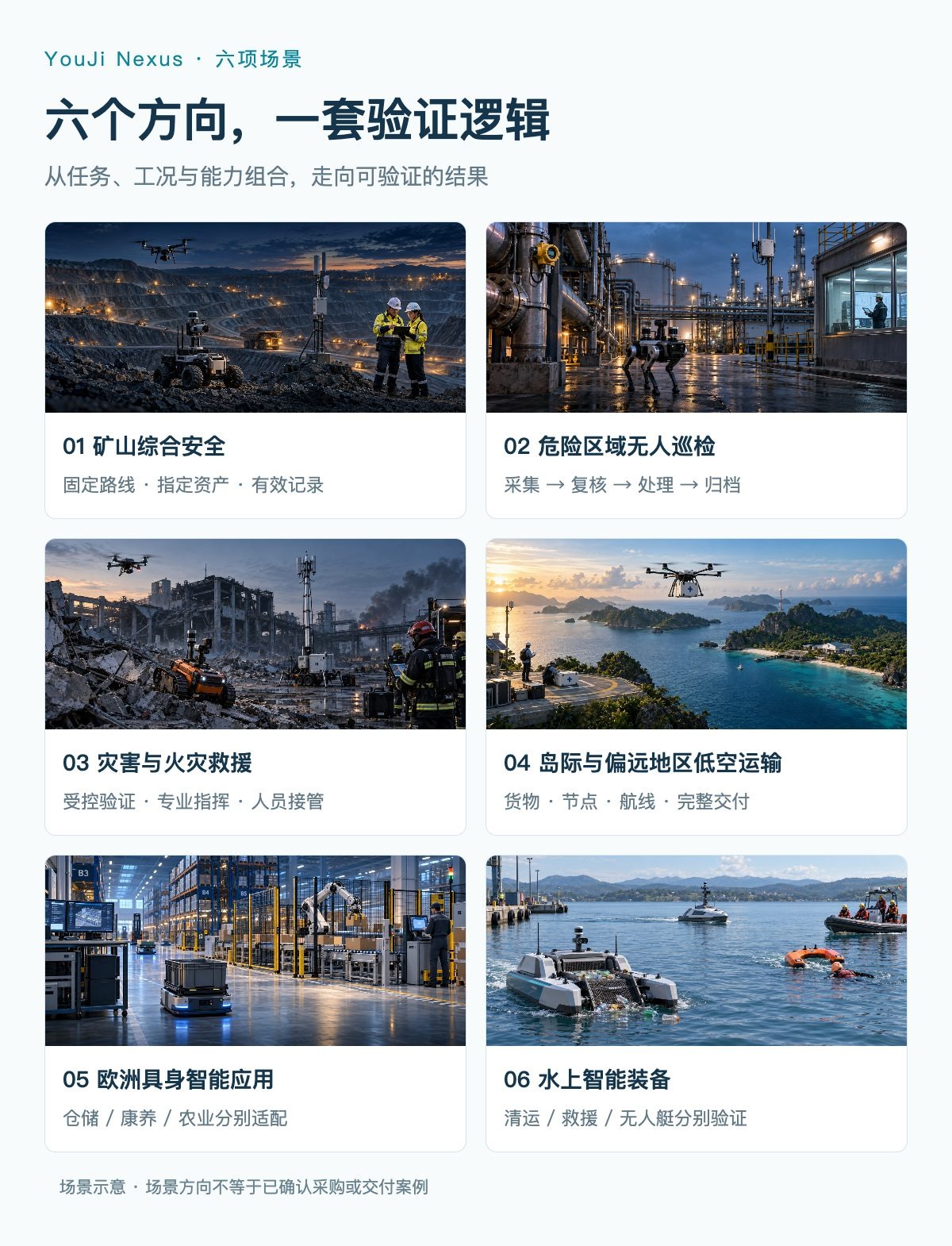
Six scenario directions: integrated mine safety; unmanned inspection in hazardous areas; natural-disaster and sudden-fire emergency rescue; inter-island and remote-area low-altitude transport; high-threshold embodied AI applications in Europe; and water-based intelligent equipment.
These are reference research and solution-solicitation materials. Six themes do not mean six validated or delivered projects; specific tasks, sites, budgets and implementation conditions require individual confirmation.
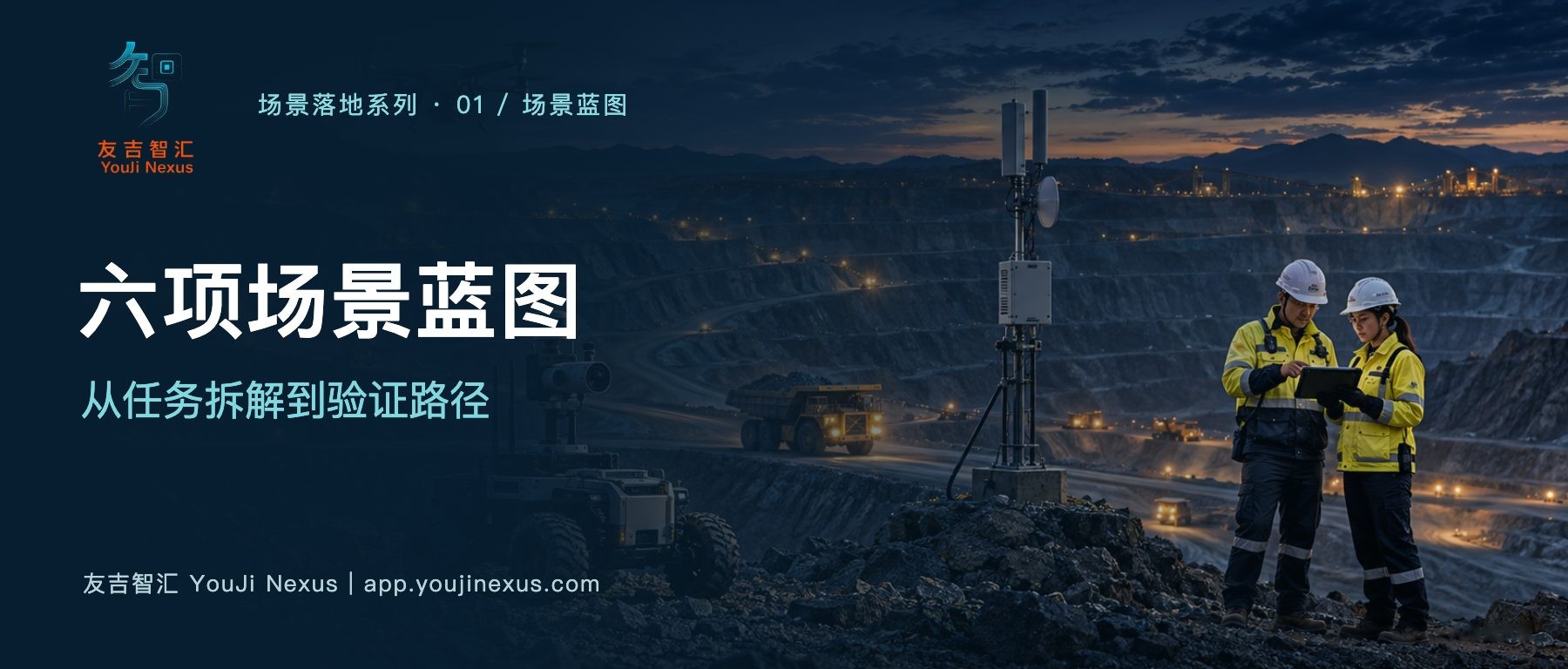
Mines need inspection, parks need monitoring, remote areas need transport. Turning these directions into a proposal still requires answering: who has this task, what the site allows, how results are confirmed, who pays for the service, and who is responsible for long-term use.
YouJi Nexus continuously conducts research and engagement on scenario discovery, solution adaptation and local delivery for embodied AI and low-altitude technologies. This article takes six scenario directions and works through tasks, operating conditions, capability mixes and validation paths, helping demand owners, technology companies and local service partners find concrete starting points for cooperation.
At YouJi Nexus's offline matching event on September 18, 2026 — "Scenario Breakthroughs · Intelligence Goes Global — Matching Event on Overseas Real-Scenario Validation and Industrial Deployment" — these six scenarios were specifically broken down, and on-site one-on-one matching exchanges were organized, further landing our ongoing scenario research in concrete tasks and cooperation discussions.
These six blueprints are scenario research and solution-solicitation materials. Named sites, task authorization, budgets and implementation conditions must be confirmed in specific coordination discussions.
01 Integrated mine safety: validate one repeatable task first
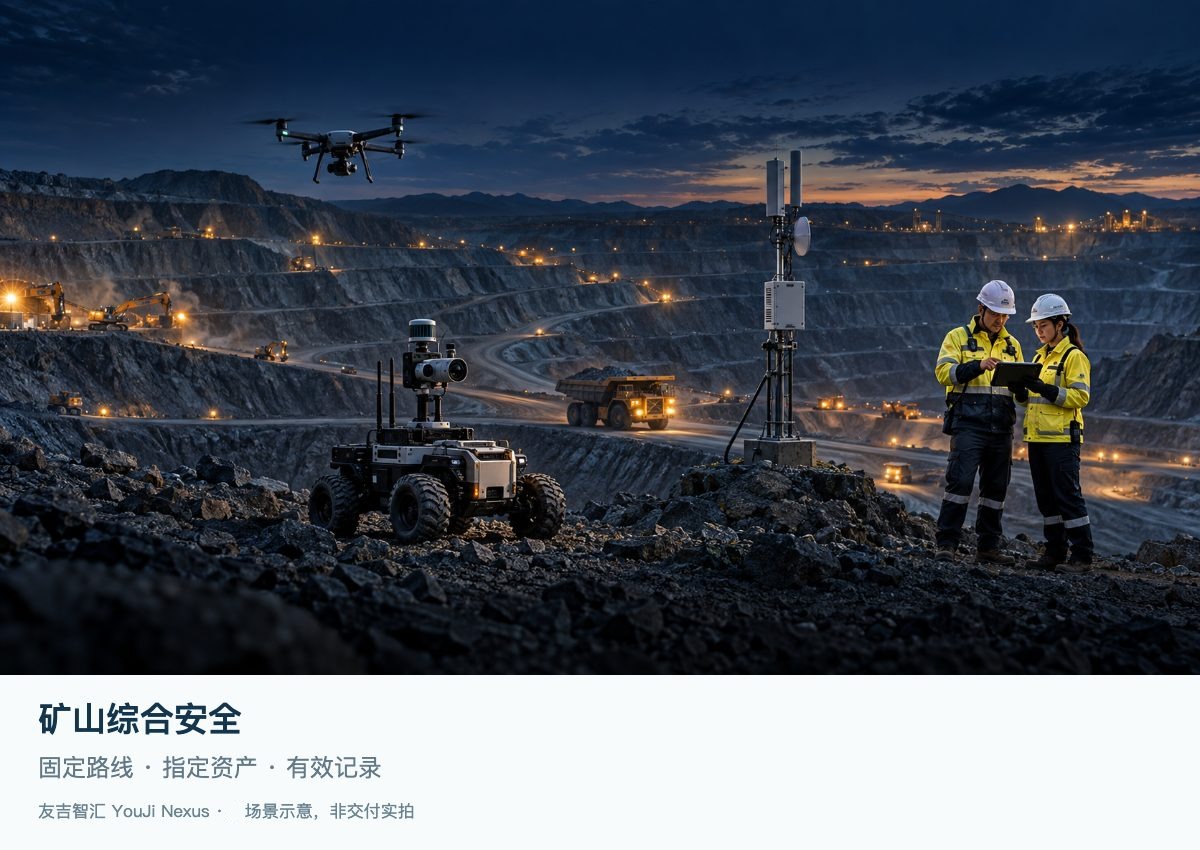
Starting task: On one fixed route at a ground processing facility, capture images, meter readings or thermal states of designated equipment to form records that personnel can review; unmanned mapping can be set as a separate task.
Site conditions: Ore type, work areas, passages, dust, lighting and communications are checked separately. Surface plant areas, underground operations and smelting high-temperature environments each use their own adaptation requirements.
Capability mix: Compare wheeled, quadruped or specialized platforms by passage, then configure inspection payloads, positioning and communications, recording software and local maintenance. For points already covered by fixed monitoring, first judge whether mobile capture is still needed.
Validation focus: Valid checkpoint records, route completion and manual takeover, data traceability, fault recovery, and the change in the number of personnel entries for the same task. Anomaly information is referred to professional personnel for judgment.
Current stage and next step: Research blueprints and task breakdowns have been formed; the next step is to obtain authorization for a specific scenario and confirm the baseline and validation scope for one mine, one zone and one task.
02 Unmanned inspection in hazardous areas: connect capture results to actual handling processes
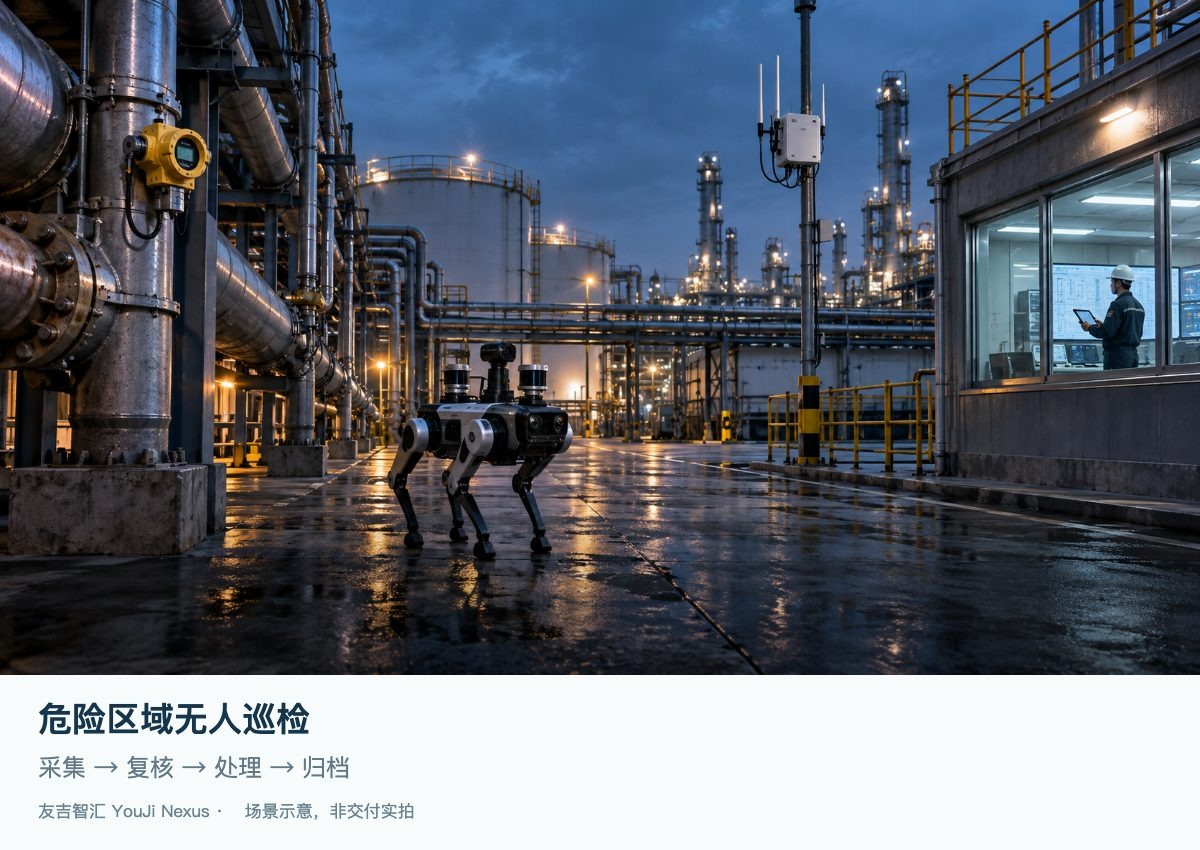
Starting task: Prioritize observable anomalies in park power distribution, power equipment, pump rooms or warehouse perimeters, and identify the checkpoints and blind spots to be supplemented.
Site conditions: Verify the asset owner, operating hours, observation distance, glare and occlusion, pedestrian traffic and existing monitoring. Where hazardous areas are involved, specially confirm the applicable conditions and access requirements for equipment and payloads.
Capability mix: Fixed or mobile sensing, visible light and thermal imaging, anomaly alerts, manual review, work-order systems, plus calibration and maintenance support. Equipment choice serves the task.
Validation focus: Valid capture rate, missed points, false alarms and missed detections, review workload, and the time and records from anomaly alert to owner handling. Acceptance should cover "capture — review — handling — archiving".
Current stage and next step: Park resource-matching leads and reference task packages exist; a specific park or tenant still needs to confirm assets, tasks, access and budget. Choose a route that can be opened and recorded first.
03 Rescue for natural disasters and sudden fires: provide reliable information around professional command
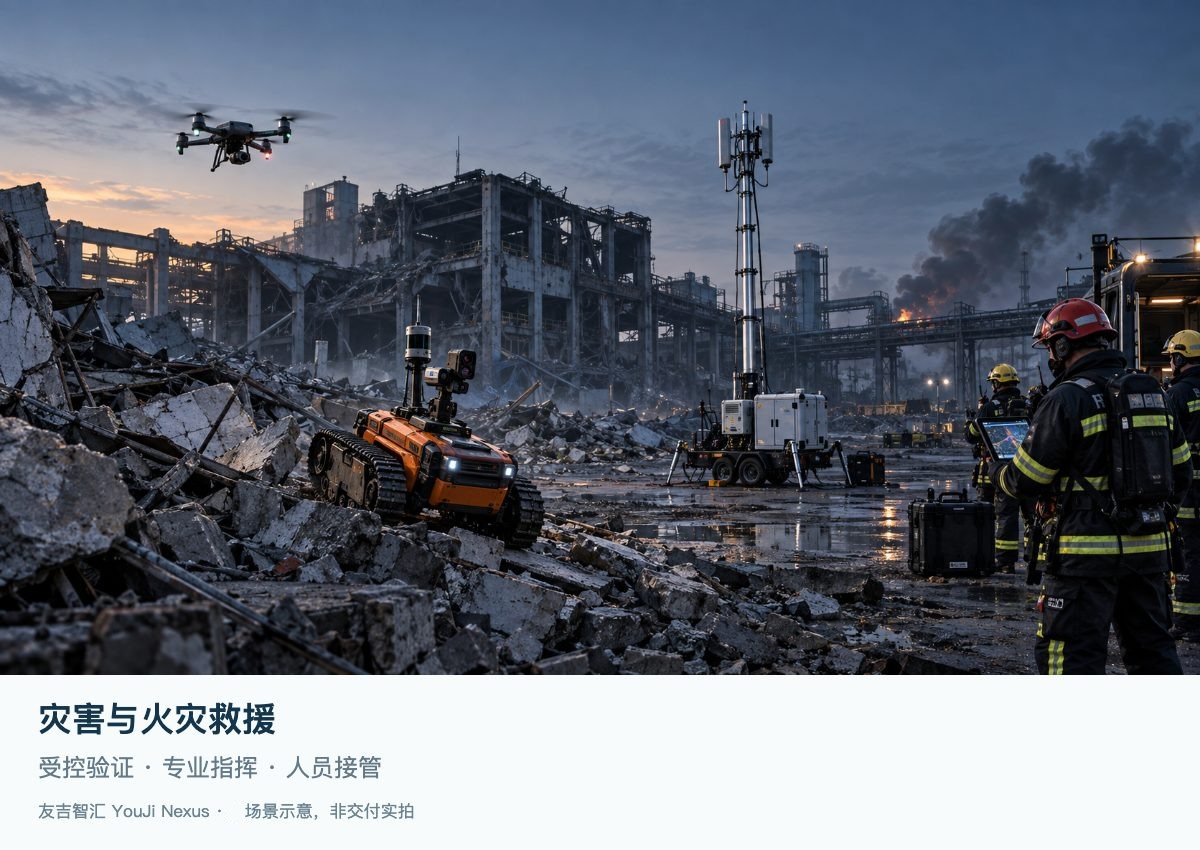
Starting task: Early reconnaissance of fire-hazard zones, image capture of damaged spaces after disasters, flood or landslide situation observation, and rescue-site communications and small-supply assistance.
Site conditions: Passages, temperature, smoke and dust, communications, withdrawal routes, on-site command and personnel reception jointly determine what work equipment can undertake.
Capability mix: Remotely controlled or assisted-autonomous platforms, applicable payloads, lighting and communications, command terminals, and training and maintenance. The degree of autonomy should be stated separately by equipment and task.
Validation focus: Whether the platform can enter and withdraw, whether information returns in time, whether positions and records are reviewable, and how lost links and faults are handled. Responsibilities for information collection and on-site action are assigned separately.
Current stage and next step: Public case studies and civil-institution interview directions have been formed; prioritize training grounds or approved controlled environments, validate one repeatable task, then discuss actual application.
04 Inter-island and remote-area low-altitude transport: validate the service chain from shipping to signed receipt
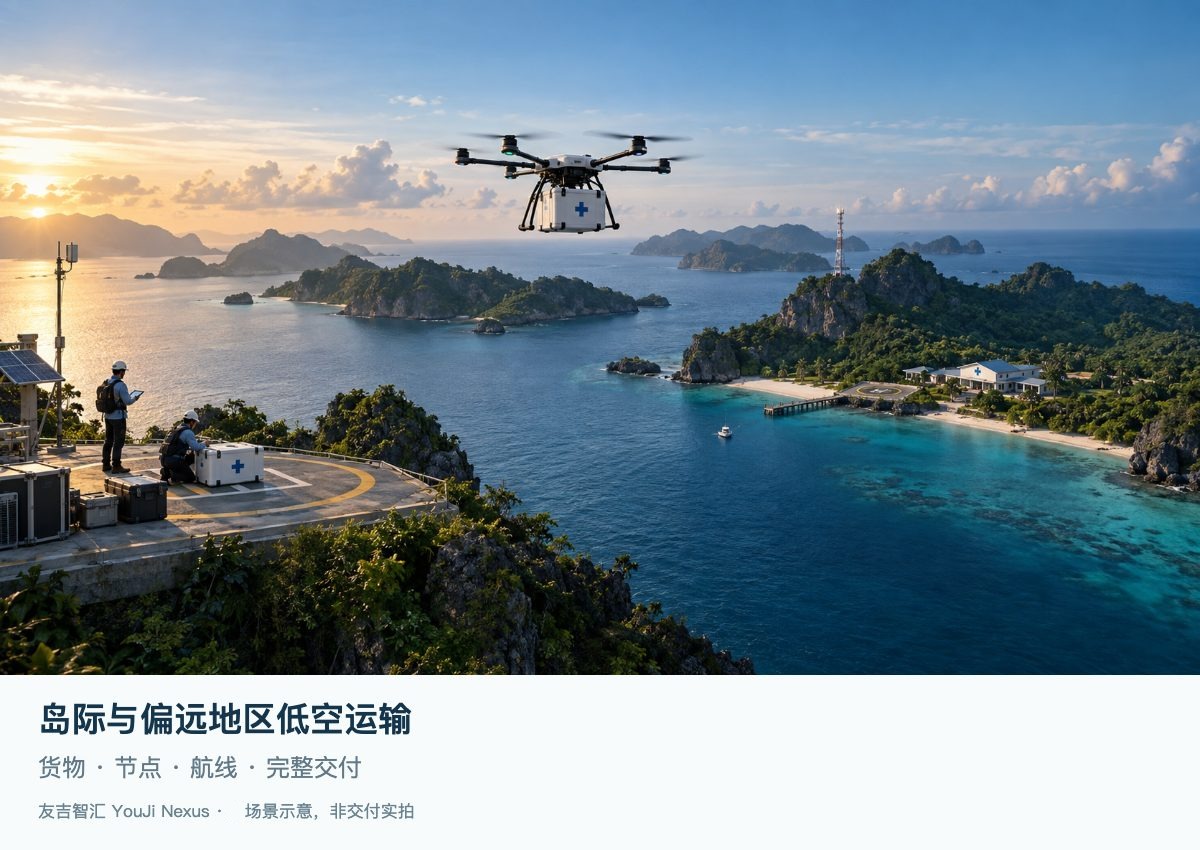
Starting task: Small-volume, time-sensitive goods between two clear logistics nodes, such as ambient medical consumables, industrial spare parts or communication components.
Site conditions: Goods category, packaged weight, takeoff/landing points, routes, weather, communications, receiving personnel and local operating conditions are verified item by item, while boat and truck alternatives are retained.
Capability mix: Applicable flight platform, packaging and loading/unloading, dispatch and traceability, local operating personnel, ground support and maintenance support.
Validation focus: Complete delivery, door-to-door time, cancellation and exception causes, goods condition, return-trip support, and the full cost per qualified delivery.
Current stage and next step: Candidate tasks have been proposed and preliminary research materials formed; specific customers, volumes, paying parties and routes remain to be confirmed. Verify the task and operating conditions first, then discuss controlled validation and target-route tests.
05 High-threshold embodied AI applications in Europe: adapt separately by warehousing, care and agriculture

Starting task: Warehouse picking-and-carrying and replenishment; care companionship, light-item delivery and caregiver-led assisted transfers; harvesting and carrying of specific crops in agriculture. Care tasks are validated separately by risk and use.
Site conditions: Warehousing checks processes and system interfaces; care checks users, care processes, personnel takeover and data handling, with transfers also checking bed-and-chair space, support devices and failure protection; agriculture checks varieties, row spacing, harvest windows and quality requirements. Tasks involving patient body support or medical use require separate verification of applicable requirements.
Capability mix: Connect robots, vision and end effectors, business software, local integration, training and maintenance according to the task.
Validation focus: Warehousing looks at complete operations and exception intervention; companionship and delivery look at task completion, user acceptance and takeover; assisted transfers look at user fit, personnel supervision, shutdown and emergency handling; harvesting looks at qualified in-box yield, damage, missed picking and manual re-picking.
Current stage and next step: Three sub-task blueprints and public case references have been formed; the next step is to obtain task, site, baseline and budget information from actual institutions, then prepare adaptation proposals.
06 Intelligent equipment for water-based operations: validate clearing, rescue and USV operations separately
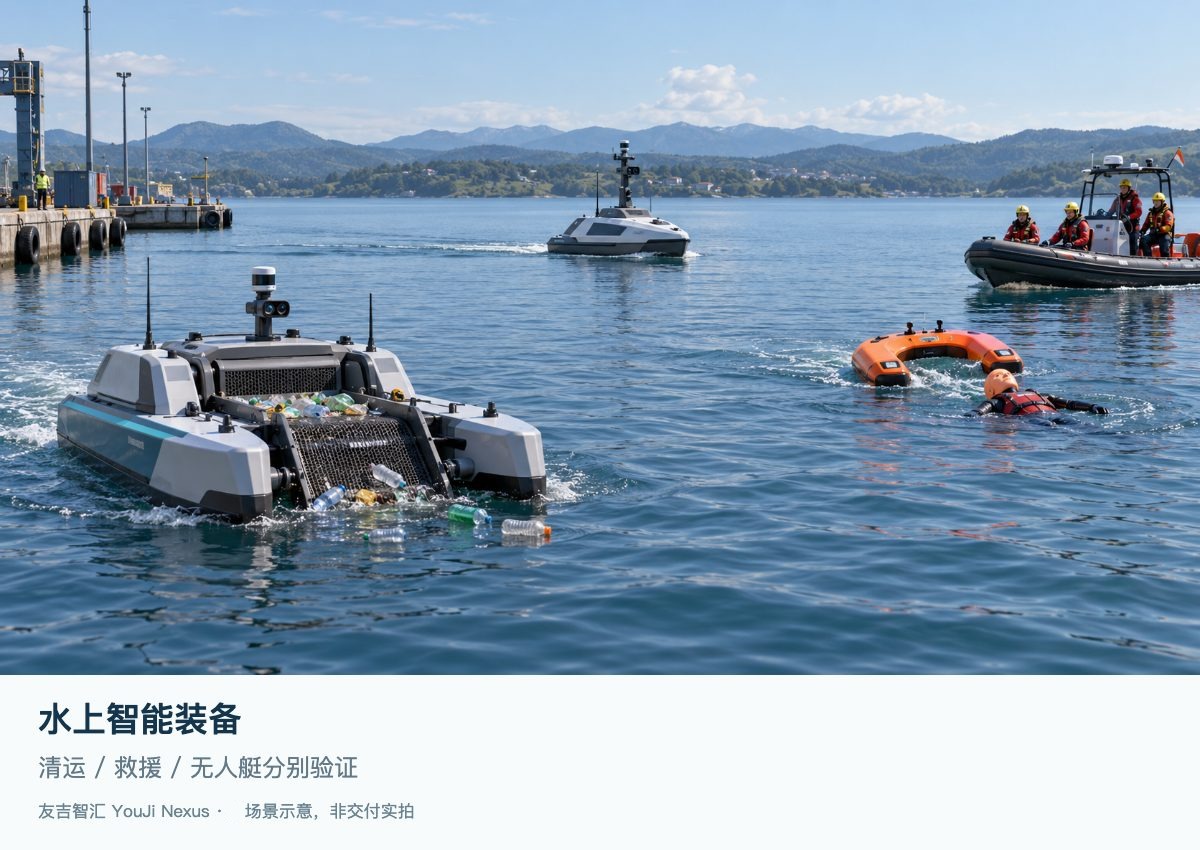
Starting task: Around rivers and lakes, scenic waters, harbor basins and controlled near-shore areas, discuss three types of work separately: floating-garbage clearing and onshore removal; water rescue robots' positioning, assisted approach and float delivery; and USV water patrol, mapping or small-cargo transport. Different tasks separately confirm the responsible owner, budget and acceptance — one equipment demonstration cannot stand in for all capabilities.
Site conditions: Verify the water-area manager, authorized operating scope, currents, wind and waves, draft and obstacles, vessel and personnel activity, communication coverage, launch/recovery points, and clarify manual-takeover arrangements for lost links, low battery and anomalies. Rescue tasks are organized by professional command personnel, with simulated drills conducted under controlled conditions first.
Capability mix: Cleaning tasks connect clearing vessels, recognition and dispatch, and onshore sorting and removal; rescue tasks connect water rescue robots, positioning and communications, remote operation and professional rescue teams; USV operations configure navigation and collision avoidance, survey or transport payloads, shore-based control and local maintenance by task.
Validation focus: Cleaning looks at coverage of designated areas, effective collection volume, missed catches, return-unloading and disposal records; rescue looks at simulated-target positioning, response, assisted approach, communications and personnel handover; patrol and transport look at track and task completion, data quality or cargo handover, collision avoidance and takeover records. The three task types form separate acceptance results, without one composite success rate.
Current stage and next step: Water-based intelligent equipment is refined continuously across clearing, rescue and USV directions; specific waters, procurement or service parties, budgets and implementation conditions still need confirmation in coordination discussions. Select one approved water area and one repeatable task first, then prepare the validation plan.
How do six blueprints move toward a project?
The six scenarios provide task directions and validation frameworks. Specific needs, budgets and procurement arrangements still need item-by-item confirmation.
The concrete path forward is: need interviews → on-site research → solution adaptation → a PoC with agreed scope and cost → implementation and acceptance → case review. Each step adds the corresponding evidence before deciding whether to enter the next stage.
YouJi Nexus focuses on connecting site tasks, technology capabilities and local delivery conditions, working with all parties to advance paid PoCs in China and overseas with clear budgets, owners and validation objectives. Specific responsibilities and costs are confirmed per project.
Scenario demand owners can submit the region, site task, current method, problems and budget range; technology companies can submit similar-task evidence, applicable boundaries and service conditions; local partners can state their service areas, capabilities and response arrangements.
Reading path: Scenario Blueprints.
Specific needs can be registered through the platform's Submit a scenario / Submit a solution entries, or sent to contact@youjinexus.com. When contacting us, state your organization, region, task and the next step you would like to advance.